

The Future of HealthTech: Where Technology Meets Better Healthcare
Technology is no longer just supporting healthcare systems — it is actively reshaping how care is delivered, monitored, and experienced. From Artificial Intelligence and predictive analytics to remote patient monitoring, digital health platforms, robotics, and connected medical devices, HealthTech is creating new possibilities across the entire healthcare ecosystem.
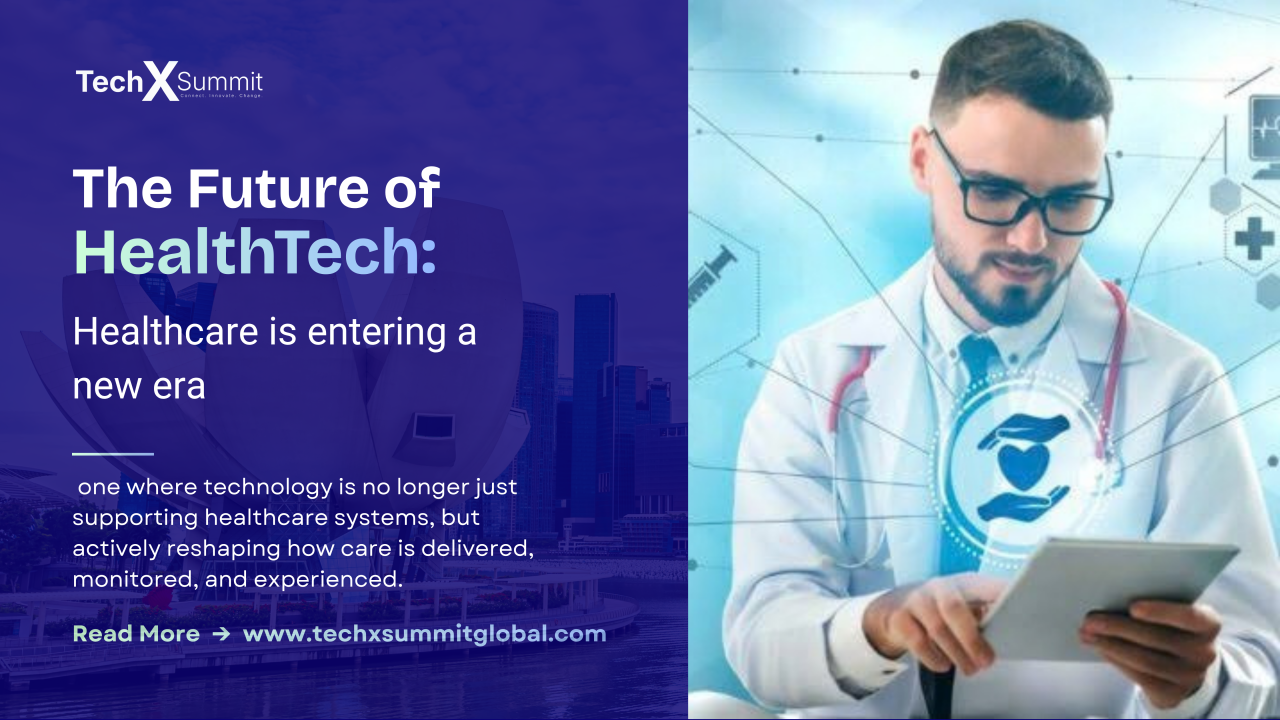
Technology is no longer just supporting healthcare systems — it is actively reshaping how care is delivered, monitored, and experienced. From Artificial Intelligence and predictive analytics to remote patient monitoring, digital health platforms, robotics, and connected medical devices, HealthTech is creating new possibilities across the entire healthcare ecosystem.
AI Is Changing Healthcare Decision-Making
Artificial Intelligence is helping healthcare organizations process large volumes of information, identify patterns, support clinical decisions, and improve operational efficiency. The opportunity is not about replacing healthcare professionals — it is about giving them better tools to make informed, timely decisions.
By augmenting clinical judgment with AI-driven insights, healthcare organizations can reduce diagnostic errors, surface hidden patterns in patient data, and accelerate the path from symptom to treatment. The goal is not automation for its own sake, but better outcomes through better information.
Healthcare Is Becoming More Connected
Digital health platforms and remote monitoring are making it possible to deliver healthcare beyond traditional hospital settings. Connected devices can continuously generate health-related data, while digital platforms can help patients and professionals stay connected throughout the care journey.
This shift is creating a more proactive approach to healthcare — moving from simply treating illness toward continuous monitoring and prevention. Patients can now manage chronic conditions from home, receive real-time alerts on deteriorating metrics, and stay connected to care teams without frequent hospital visits.
Data & Cybersecurity Are Now Healthcare Priorities
As healthcare becomes increasingly digital, the importance of protecting sensitive health data continues to grow. Healthcare organizations need to think beyond innovation. Data privacy, cybersecurity, compliance, and responsible use of technology must be built into digital healthcare strategies from the beginning — not bolted on after the fact.
A health record is among the most sensitive categories of personal data an organization can hold. Breaches don't just carry financial cost; they carry direct patient harm. That makes security, identity management, consent, and regulatory compliance non-negotiable foundations of any serious HealthTech programme.
"The biggest opportunity is not simply to digitize healthcare. It is to make healthcare smarter, more connected, more proactive, and more human."
— Tech X Summit Editorial, 2026
Toward More Personalized Healthcare
One of the most exciting possibilities of HealthTech is personalization. With the combination of data, AI, connected devices, and advanced analytics, healthcare can increasingly move toward solutions that are tailored to individual needs rather than relying entirely on one-size-fits-all approaches.
Personalization spans the entire care journey — from risk stratification that flags which patients need proactive outreach, to treatment plans adjusted for genetics, lifestyle, and real-time biomarkers, to post-treatment recovery tracking that adapts to how a patient is actually responding. The shift is from population-level medicine to individual-level care.
Key Takeaways: The Future of HealthTech
- AI is becoming a decision-support tool, not a replacement — healthcare professionals get better tools for pattern recognition, clinical decisions, and operational efficiency.
- Healthcare is moving beyond the hospital — connected devices and digital platforms enable remote monitoring, continuous data, and proactive care throughout the patient journey.
- Data security is now a healthcare priority, not an afterthought — privacy, cybersecurity, compliance, and responsible tech use must be built into HealthTech from day one.
- Personalization is the next frontier — data + AI + connected devices + analytics enable tailored healthcare solutions instead of one-size-fits-all approaches.
- The future of HealthTech requires collaboration — healthcare professionals, tech companies, researchers, policymakers, and innovators must work together to build solutions that are secure, accessible, scalable, and genuinely useful.
Conclusion
The future of HealthTech will not be defined by technology alone. It will depend on how effectively healthcare professionals, technology companies, researchers, policymakers, and innovators collaborate to build solutions that are secure, accessible, scalable, and genuinely useful. The biggest opportunity is not simply to digitize healthcare — it is to make healthcare smarter, more connected, more proactive, and more human. At Tech X Summit Singapore 2026, HealthTech will be part of the broader conversation around how emerging technologies are shaping industries and creating the next generation of innovation. 10 December 2026 — Marina Bay Sands Expo & Convention Centre, Singapore.
