

Who Owns the Intelligence? The Rise of Sovereign AI
In the AI economy, access to intelligence is becoming a strategic question. As dependence on AI grows, governments and organizations are asking how much control they should have over the infrastructure, data, and capabilities powering these systems.
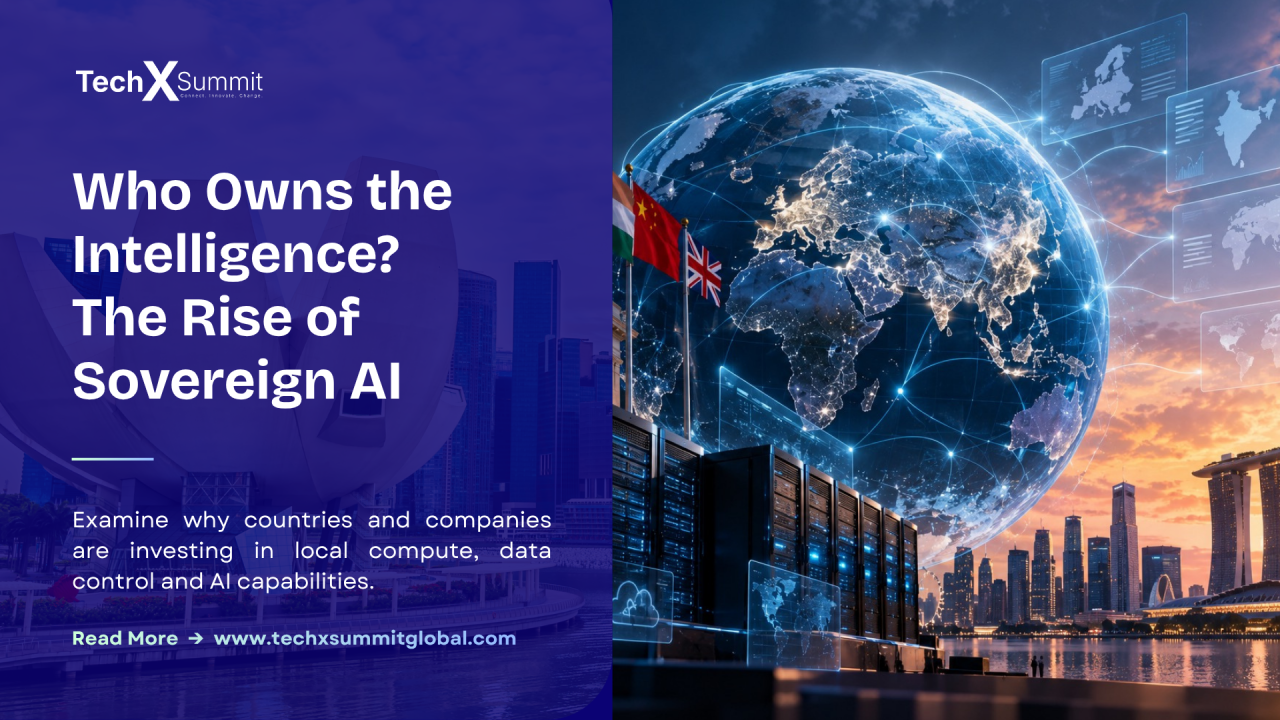
In the AI economy, access to intelligence is becoming a strategic question. Artificial intelligence is increasingly embedded in economic planning, public services, research, and enterprise operations. As dependence on AI grows, governments and organizations are asking a critical question: how much control should they have over the infrastructure, data, and capabilities powering these systems? This is where sovereign AI enters the conversation. Sovereign AI refers broadly to developing or controlling AI capabilities in ways that align with a country's or organization's requirements for data governance, infrastructure, security, language, regulation, and strategic autonomy.
Why Control Matters
Organizations operating across borders must navigate different regulatory environments and data-handling requirements. Governments may also want AI systems that understand local languages, cultural contexts, and public-sector needs. Building local capabilities can improve resilience and provide greater control over sensitive workloads.
However, developing AI infrastructure requires significant investment in computing resources, energy, specialized talent, and research. Complete technological independence may not be practical or economically desirable for every organization. The question is therefore not whether to build sovereign AI, but which capabilities must remain under direct control and which can be accessed through trusted partnerships.
"In the next phase of digital competition, technological capability will matter — but so will the ability to decide where that capability comes from and who controls it."
— Tech X Summit Global Editorial, 2026
Collaboration Versus Independence
The future of sovereign AI is unlikely to be a simple choice between building everything independently and relying entirely on external providers. A more practical approach may combine local control over critical assets with international research partnerships, shared infrastructure, and carefully governed technology ecosystems.
For business leaders, the challenge is to determine which capabilities must remain under direct control and which can be accessed through trusted partnerships. This requires a clear understanding of regulatory requirements, data sensitivity, strategic importance, and the cost-benefit of building versus accessing AI capabilities.
In the next phase of digital competition, technological capability will matter — but so will the ability to decide where that capability comes from and who controls it.
Key Takeaways: The Rise of Sovereign AI
- Sovereign AI = strategic autonomy — developing or controlling AI capabilities aligned with national or organizational requirements for data governance, infrastructure, security, language, regulation, and strategic independence.
- Control matters for cross-border operations — different regulatory environments, local language and cultural context, and public-sector needs drive demand for local AI capabilities.
- Full independence isn't always practical — building AI infrastructure requires significant investment in computing, energy, talent, and research. Complete technological independence may not be economically desirable for every organization.
- Collaboration is the pragmatic path — combine local control over critical assets with international research partnerships, shared infrastructure, and governed technology ecosystems.
- The strategic question isn't just capability — it's about deciding where capability comes from and who controls it. In digital competition, sovereignty matters as much as technology.
Conclusion
At Tech X Summit Global Singapore 2026, technology leaders, founders, innovators, and decision-makers will come together to explore emerging technologies and the ideas shaping tomorrow's businesses. The conversation around sovereign AI — data governance, strategic autonomy, infrastructure control, and the balance between independence and collaboration — will be central to how organizations and nations navigate the next phase of the AI economy. Marina Bay Sands Expo & Convention Centre, Singapore | 10 December 2026. Explore more: https://techxsummitglobal.com/
